
Iranian food is the least known of the world's great cuisines, and the reason is simple — almost nobody outside the country has eaten it. There is no Iranian equivalent of the corner curry house or the neighbourhood trattoria in most Western cities, so travellers arrive with no reference point at all. They order kabab on the first day because they recognise the word, eat kabab for six days, and go home thinking Iranian food is grilled meat and rice.
It is a cuisine built on slow-cooked herbs, sour fruit and rice technique, in which the most prized part of the meal is a piece of burnt crust and the most common ingredient is a bunch of parsley. This guide lists the twenty dishes worth crossing a country for, tells you which city does each one properly, marks the ones a vegetarian can eat, and gives you the eight Persian phrases that make ordering possible.
How an Iranian Meal Actually Works
Before the list, four things that change how you eat here.
Lunch is the main event. It runs from about one until three, it is when the stews come out, and it is followed by a nap in any household that can manage one. Dinner starts at nine or later and is lighter — frequently kabab, because kabab is fast. A traveller who eats the big meal in the evening, European-style, will miss most of this cuisine.
The table starts before the food. Flatbread arrives, along with sabzi khordan — a plate of raw herbs, radishes, spring onions and white cheese that you eat with your hands throughout the meal. It is not a garnish and it is not optional. Wrapping mint and basil in bread with a piece of cheese between mouthfuls of stew is the correct way to eat here.
Sour, not spicy. The organising flavour of Iranian cooking is acidity — dried lime, pomegranate molasses, verjuice, barberries, tamarind, unripe grapes. Chilli appears only in the far south. If you have been told Middle Eastern food is hot, unlearn it before you arrive.
Rice is a technique, not a side. Iranian rice is parboiled, drained, then steamed under a cloth so every grain separates. The crust that forms at the bottom of the pot is tahdig, literally "bottom of the pot", and it is the single most fought-over thing on any Iranian table. Ask for it every time. The word alone will earn you a better lunch.
The Twenty Dishes, in One Table
This is the table to photograph and keep on your phone. Dishes are ordered roughly as you are likely to meet them rather than by category, and the vegetarian column is honest rather than optimistic — see the section below for why "ask" appears where it does.
| Dish | What it is | Best in | Vegetarian | When |
|---|---|---|---|---|
| 01Chelo Kabab Koobidehچلوکباب کوبیده · chelo kabāb kubide | Minced lamb and beef pressed onto flat skewers over charcoal, with saffron rice, grilled tomato and raw onion. The national dish. | Everywhere · best in Tehran | Contains meat | Lunch |
| 02Joojeh Kababجوجه کباب · juje kabāb | Chicken marinated in saffron, lemon and onion. The safe order when you cannot read the menu, and often the best thing on it. | Everywhere | Contains meat | Lunch or dinner |
| 03Ghormeh Sabziقورمه سبزی · qorme sabzi | The stew Iranians argue about. Parsley, coriander, fenugreek and leek slow-cooked almost black, with kidney beans, lamb and dried lime. | Home cooking · sonnati restaurants | Contains meat | Lunch |
| 04Fesenjanفسنجان · fesenjān | Ground walnuts and pomegranate molasses cooked down for hours into a dark, sour-sweet sauce, usually with duck or chicken. | North · Gilan | Contains meat | Autumn |
| 05Gheimehقیمه · qeyme | Yellow split peas, dried lime and diced lamb, crowned with a handful of thin chips. The chips are not a garnish, they are the point. | Everywhere | Contains meat | Lunch |
| 06Khoresht-e Bademjanخورش بادمجان · khoresh-e bādemjān | Fried aubergine and lamb in a saffron and tomato sauce sharpened with verjuice. The gentlest introduction to Iranian stews. | Everywhere | Contains meat | Lunch |
| 07Baghali Polo ba Mahicheباقالی پلو با ماهیچه · bāqāli polo bā māhiche | Rice layered with dill and broad beans, served with a lamb shank braised until it falls off the bone. The celebration dish. | Shiraz · Tehran | Contains meat | Dinner · occasions |
| 08Zereshk Polo ba Morghزرشک پلو با مرغ · zereshk polo bā morgh | Saffron rice scattered with barberries — small, scarlet, startlingly sour — with braised chicken. Every wedding in Iran serves it. | Everywhere | Contains meat | Lunch or dinner |
| 09Tahchinته چین · tah-chin | Rice bound with yoghurt, egg and saffron, baked into a golden cake with chicken hidden inside and cut into wedges. | Tehran · Isfahan | Ask first | Lunch |
| 10Abgoosht / Diziآبگوشت / دیزی · ābgusht / dizi | Lamb, chickpeas and potato cooked in a stone pot. You strain the broth into a bowl, pound the solids to a paste, and eat them in turn. A ritual as much as a meal. | Traditional teahouses | Contains meat | Lunch |
| 11Ash-e Reshtehآش رشته · āsh-e reshte | Thick green soup of herbs, beans and noodles, finished with fried mint, onion and whey. Sold from street cauldrons in winter. | Everywhere · winter | Veg · dairy | Winter · street |
| 12Kashk-e Bademjanکشک بادمجان · kashk-e bādemjān | Smoky aubergine mashed with garlic, mint and whey, eaten warm with bread. The best-loved starter in the country. | Everywhere | Veg · dairy | Starter |
| 13Mirza Ghasemiمیرزا قاسمی · mirzā qāsemi | Aubergine smoked over flame, then cooked down with garlic, tomato and egg. Gilan's gift to vegetarians. | Gilan · Rasht | Vegetarian | Starter or main |
| 14Kuku Sabziکوکو سبزی · kuku sabzi | A dense herb frittata — more herb than egg — served cold in wedges with bread and yoghurt. Eaten at Nowruz. | Everywhere | Vegetarian | Any time |
| 15Beryaniبریانی · beryāni | Isfahan's own: minced lamb and lung pressed into a disc, seared, served on flatbread with mint and cinnamon. Nothing to do with biryani. | Isfahan only | Contains meat | Lunch only |
| 16Khoresht-e Mastخورش ماست · khoresh-e māst | Isfahan again, and it confuses everyone. Yoghurt, saffron and sugar set into a cold sweet dish served alongside savoury food. | Isfahan | Ask first | Side dish |
| 17Ghalyeh Mahiقلیه ماهی · qalye māhi | The south's fish stew — tamarind, coriander, fenugreek and chilli. Genuinely hot, which almost nothing else in Iran is. | Bandar Abbas · Khuzestan | Contains meat | Lunch |
| 18Dolmehدلمه · dolme | Vine leaves, peppers or aubergines stuffed with herbs, rice and split peas, sweet-soured with vinegar and sugar. | Northwest · Tabriz | Ask first | Starter |
| 19Sabzi Polo ba Mahiسبزی پلو با ماهی · sabzi polo bā māhi | Herbed rice with fried fish, eaten by every Iranian household on the eve of Nowruz and available year-round in the north. | Caspian coast | Contains meat | Nowruz · spring |
| 20Halim Bademjanحلیم بادمجان · halim bādemjān | Aubergine and lamb pounded with whey into a smooth, deeply savoury paste, scooped with bread. Winter food. | Central Iran | Contains meat | Winter |
Tahdig — the Thing to Understand First
If you take one word from this page, take this one. Tahdig is the layer of rice that crisps against the base of the pot into a golden sheet somewhere between a crust and a crisp. It is lifted out in shards and it disappears within a minute of reaching the table.
It is not always plain rice. Cooks lay potato slices, flatbread, or a mixture of yoghurt and saffron in the oiled pot before the rice goes in, so the bottom layer turns into something else entirely — the yoghurt version comes out the colour of amber and shatters like brittle. Restaurants do not always offer it. Asking for tahdig by name marks you out as someone who has been paying attention, and in our experience the kitchen responds accordingly.
One Dish Per City
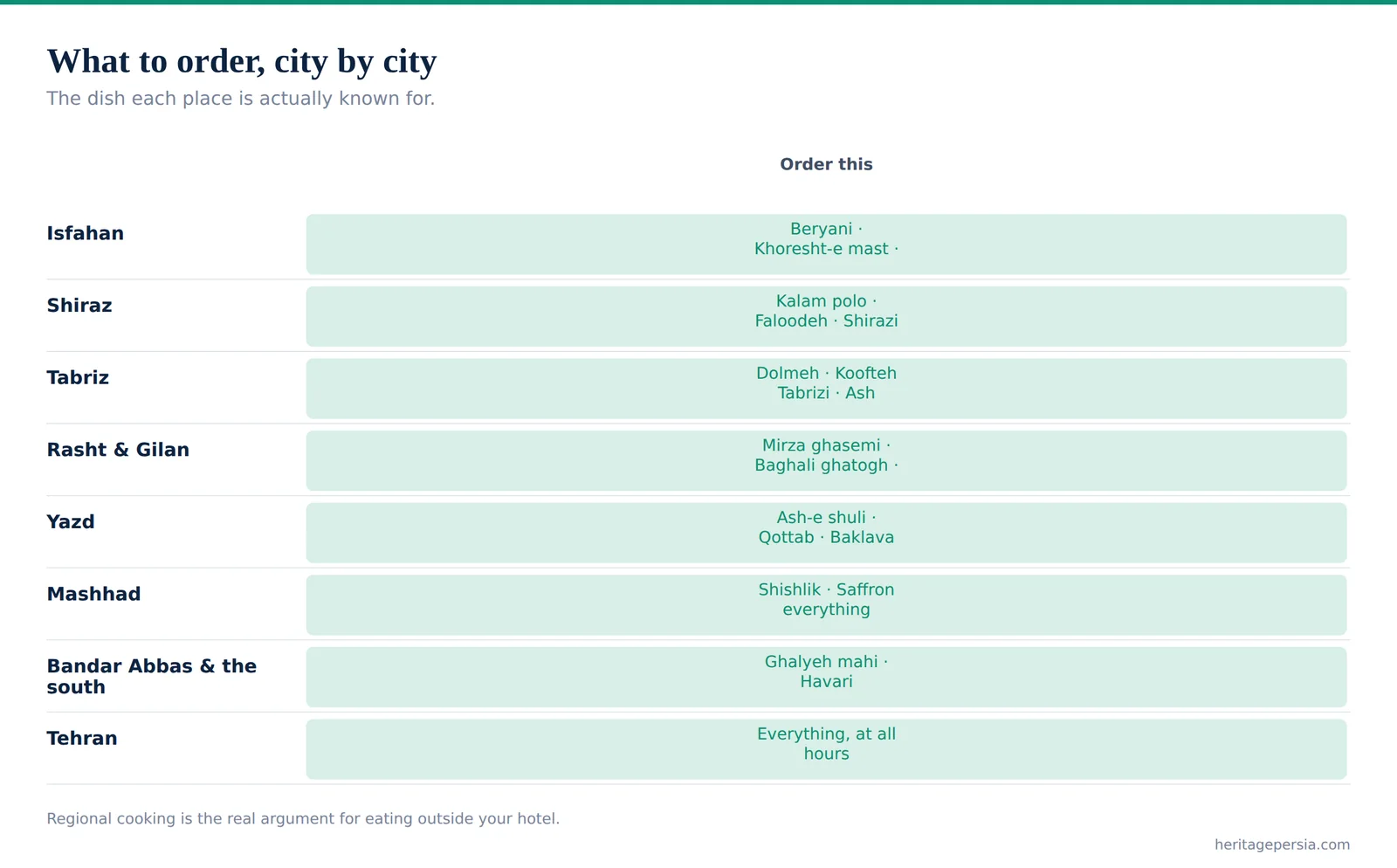
Iranian cooking is regional in a way the national restaurant menu conceals. Eating the local thing in the local place is the difference between a trip through Iran and a trip through Iranian restaurants.
| City | Order this | Why |
|---|---|---|
| Isfahan | Beryani · Khoresht-e mast · Gaz | The beryani at lunch is a rite of passage; buy gaz in the bazaar where they let you taste. |
| Shiraz | Kalam polo · Faloodeh · Shirazi salad | Faloodeh after dinner is non-negotiable, and Shiraz claims the salad the whole country eats. |
| Tabriz | Dolmeh · Koofteh Tabrizi · Ash | Koofteh Tabrizi is a meatball the size of a grapefruit with a surprise inside. |
| Rasht & Gilan | Mirza ghasemi · Baghali ghatogh · Fesenjan | UNESCO named Rasht a City of Gastronomy. The best vegetarian eating in Iran is here. |
| Yazd | Ash-e shuli · Qottab · Baklava | Desert sweets built to last, and a sour herb soup found nowhere else. |
| Mashhad | Shishlik · Saffron everything | Shishlik is lamb chops done properly, and Khorasan grows most of the world's saffron. |
| Bandar Abbas & the south | Ghalyeh mahi · Havari | The only genuinely spicy cooking in Iran, with tamarind and fresh chilli. |
| Tehran | Everything, at all hours | The one place where every regional cuisine has a restaurant, plus the best modern cooking. |
Rasht deserves the special mention. UNESCO named it a City of Gastronomy, the cooking of Gilan is sour, garlicky and unlike anything on the plateau, and it is where a vegetarian eats best in the entire country.
Being Vegetarian in Iran — the Honest Version
It is manageable and it takes work. Iran is a meat-eating culture in which meat has historically signalled hospitality and prosperity, so a host who serves you a plate without it may feel they have failed you. Dedicated vegetarian restaurants exist in Tehran, Isfahan, Shiraz and Mashhad, and essentially nowhere else.
The good news is that the traditional repertoire contains a great deal of accidental vegetarian food. Mirza ghasemi, kuku sabzi, adas polo, baghali polo, kashk-e bademjan, borani, mast-o-khiar, ab-doogh-khiar and most of the aubergine starters are meat-free as cooked.
The trap is the dishes that look safe and are not.
- Kashk is dairy, not a sauce. Kashk-e bademjan and most ash are out for vegans, fine for vegetarians.
- Ash-e reshteh is usually vegetarian but is sometimes built on meat stock. Ask.
- Tahchin is rice, yoghurt and egg — and normally has chicken layered inside it.
- Dolmeh is often minced-meat stuffed, sometimes not. Ask before assuming.
- Rice may be cooked in a pot that carried lamb an hour earlier. Most vegetarians decide this is a battle not worth fighting.
Say man giyāh-khāram — I am vegetarian — and expect to explain it twice. The phrase table below carries the rest.
Eight Phrases That Make Ordering Possible
English menus exist in tourist restaurants and nowhere else. These eight cover almost every situation, and attempting them badly is received far better than not attempting them.
| English | Persian | Say it like this |
|---|---|---|
| I am vegetarian | من گیاهخوارم | man giyāh-khāram |
| Without meat, please | بدون گوشت، لطفاً | bedun-e gusht, lotfan |
| Does this have meat broth? | این آب گوشت دارد؟ | in āb-e gusht dārad? |
| Without kashk (whey) | بدون کشک | bedun-e kashk |
| Not spicy | تند نباشد | tond nabāshad |
| What do you recommend? | چه چیزی پیشنهاد میکنید؟ | che chizi pishnahād mikonid? |
| It was delicious | خیلی خوشمزه بود | kheyli khoshmaze bud |
| The bill, please | صورتحساب، لطفاً | surat-hesāb, lotfan |
💡 One cultural note that will confuse you: taarof. A shopkeeper or restaurateur may wave away your money and say the meal is a gift. This is ritual politeness rather than an offer, and the correct response is to insist, warmly, two or three times, until they accept. Paying immediately when the first refusal comes is the mistake; walking out without paying is a much bigger one.
Bread, Drinks and the Things Around the Meal
Tahdig ته دیگ
The crisp golden crust from the bottom of the rice pot — literally 'bottom of the pot'. Made with plain rice, bread, potato or saffron yoghurt. Ask for it; families fight over it.
Sangak سنگک
Flatbread baked on a bed of hot pebbles, sold hot from the oven and folded over your arm to carry home. Check for stray stones.
Doogh دوغ
Salted yoghurt drink, sometimes fizzy, always with dried mint. It cuts through kabab better than anything else on the table.
Faloodeh فالوده
Shiraz's dessert — frozen rice-flour vermicelli in rosewater syrup, served with lime juice. Nothing else in the world tastes like it.
Bastani Sonnati بستنی سنتی
Saffron and rosewater ice cream studded with frozen cream and pistachio, often served pressed between two wafers.
Chai چای
Black tea, poured dark, drunk through a sugar cube held between the teeth. Refused only by people who do not know they will be offered it eight more times.
Where to Eat, and What the Signs Mean
Three kinds of place matter. A chelo kababi does one thing — grilled meat and rice — quickly and usually very well; these are lunch places and they are where Iranian men eat every day. A sonnati or traditional restaurant, often in a restored courtyard house with cushions and a fountain, serves the full range of stews and is where you go for ghormeh sabzi and a long meal. And the street holds the food most travellers remember longest — ash from a cauldron in winter, baked beetroot on a cold evening, liver grilled on a pavement skewer, and the sandwich shops that fill after ten at night.
Prices in euro terms are very low even in the best restaurants of Isfahan and Shiraz. Bear in mind that no foreign card works anywhere in the country, so restaurant meals are a cash business like everything else — see our note on paying for things in Iran.
What to Bring Home
Saffron is the obvious one and the one most often bought badly. Iran grows the overwhelming majority of the world's supply, the good stuff is sold by weight in the bazaars of Mashhad and Isfahan, and the rule is simple — buy whole threads rather than powder, since powder can be anything at all. Deep red with pale ends is right; uniformly orange is dyed.
Gaz from Isfahan, pistachio nougat made with tamarisk sap, is far better bought where they let you taste it than in an airport box. Sohan from Qom is saffron brittle and travels well. Pistachios from Rafsanjan and Damghan are the best in the world and cost a fraction of what they do at home. Dried limes weigh nothing and turn your own cooking Iranian for a year.
✉️ Want to eat properly rather than adequately? Tell us your route and we will send the specific places our guides eat — including the ones with no sign and no menu. We also run cooking sessions and market mornings in Isfahan, Shiraz and Rasht. Talk to our team →
Continue reading
Frequently Asked Questions
What travellers ask our guides over the first lunch of every trip.
Eat Iran Properly
Market mornings, home kitchens and the restaurants with no sign — the part of the country you cannot book online.
See Our Tours →